Education link building for schools, colleges and course providers
Schools, colleges, online course providers and tutoring businesses all compete for searches that parents and students take seriously. Links from education publications they already read help you rank and help them trust you. Here's where to find them, and why most .edu link offers aren't what they say.
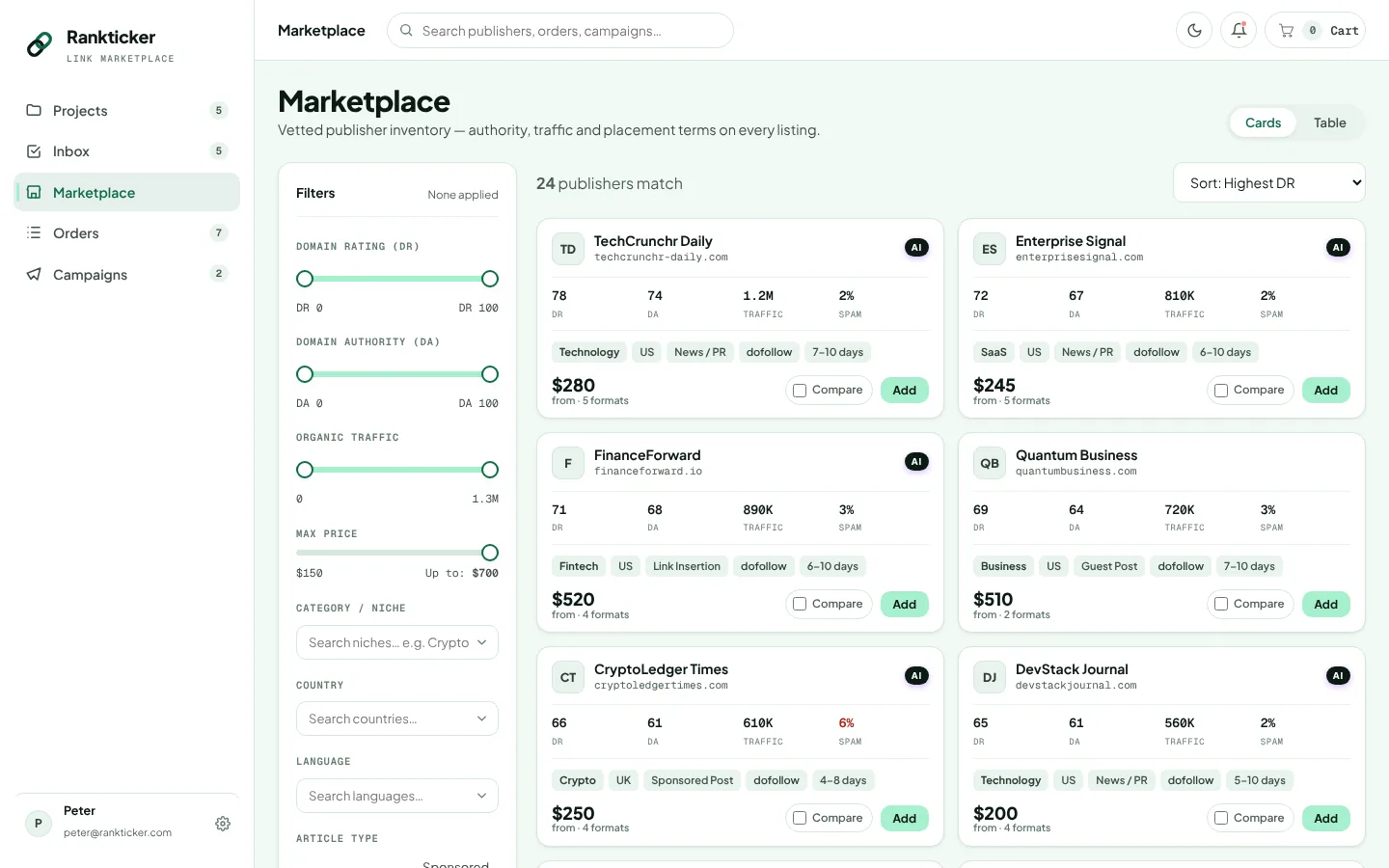
Find publishers in this nicheSee how it works
Who's searching, and what they read
Education searches come from people about to spend serious money or time. A parent comparing private schools. A 30-year-old looking at a part-time data course. A student checking whether an online degree is accredited. They read differently from a typical shopper: slowly, sceptically, and across several sources before they enquire.
So the publications that matter are the ones those readers trust. Parenting and family titles for schools and tutoring. Career, business and personal finance sites for adult learning and professional courses. Student and higher education news for colleges. Local news for anything with a campus or a catchment area.
Education publications on Rankticker
Live listings on 30 October 2026, using the topic tags on each publication.
| Segment | Publications | Median starting price |
|---|---|---|
| All education topics | 3,367 | $168 |
| Education, DR 50+ | 536 | $509 |
| Education, based in the United States | 699 | |
| Higher education | 1,210 | |
| K-12 education | 951 |
The .edu link myth
"Buy .edu backlinks" is a popular search, and a popular scam. In the US, .edu names are restricted to accredited postsecondary institutions, and the registry is run under contract with the Department of Commerce. Nobody sells genuine editorial links on university sites by the dozen.
What those offers usually are: blog comments, forum profiles, abandoned student pages or, worst case, pages on a hacked university server. Most of them carry little value, and the hacked ones are a risk to your brand. Our edtech guide covers the same problem with .ac.uk and .sch.uk.
If you want a real university link, earn it: a scholarship with genuine criteria, research a department wants to cite, a free tool students actually use. Then use paid placements on education publications to support it.
Where to point your links
- Program and course pages, which rank for "[subject] course online" and "[degree] near me"
- Admissions, fees and open day pages, which parents and students compare
- Resource pages, such as revision guides, career guides and calculators, which attract links on their own
- Campus or location pages, supported by local news
Rules and tone
Education advertising is regulated in most places, and claims about outcomes (pass rates, salaries, job placement) get the most scrutiny. In the US the FTC has taken action against schools over misleading earnings claims. Keep sponsored copy factual, link to the evidence, and choose rel="sponsored" where you're paying. Every Rankticker listing states whether the article is labelled.
A simple education campaign
Start with a monthly budget and a maximum cost per link. Limit the campaign to education, parenting, careers and local news in your country. Point the first three months at your two or three most valuable program pages and one resource page. Approve each recommendation before it's ordered, and watch rankings for those pages in the project's SEO tab. After a quarter you'll know which publications move things, and you can shift budget to them.
Questions about education link building
Can I buy .edu backlinks?
Not real ones in the way most sellers suggest. In the US, .edu domains are limited to accredited postsecondary institutions. Offers of cheap '.edu links' are usually comments, forum profiles or hacked pages on university sites, which carry little value and real risk.
How many education publications does Rankticker list?
3,367 on 30 October 2026, across education, higher education, K-12, e-learning, language learning, early childhood and student life topics. 536 had a Domain Rating of 50 or more.
What do education links cost?
The median starting price for education publications was $168 on 30 October 2026, and $509 for DR 50+ sites. Publishers set their own prices and Rankticker adds no markup.
Which pages should a school or course provider build links to?
Course and program pages, admissions or enrolment pages, and genuinely useful resources such as guides, calculators or study materials. Resource pages attract links naturally and pass strength to the pages that convert.
Is this different from edtech link building?
Yes. Edtech companies sell software to schools and need trade press read by school leaders and IT teams. This page is for organisations that teach: schools, colleges, course providers and tutors. Our edtech guide covers the software side.
Related
Link building for edtech
Link building for edtech: why university links are rarely for sale, which education publications reach school and parent buyers, anchor mix and a samp…
Buy guest posts on sites you choose by name
Buy guest posts from publishers you pick by name. See DR, traffic, link terms and the publisher's own price first. Writing included or bring your own.
PR articles on news sites you can name
Publish PR articles, paid news and press releases on news and industry sites you choose. See each outlet's traffic, price and labelling terms first.
Local link building for small businesses
Local link building for small businesses: Google Business Profile, citations, local news, community links, anchor mix and a sample campaign.
Topical relevance vs Domain Rating: what to pay for in 2026
Why topical relevance beats raw Domain Rating when you buy links in 2026, how Google reads link context, and a practical checklist for judging relevan…
How to evaluate a backlink in 2026: the signals that matter
How to evaluate a backlink in 2026: relevance, real traffic, TF:CF, outbound links, indexation, placement, anchor, attribute, permanence and AI citati…
See the publishers before you spend a penny
Filter real publications by niche, DR, traffic and price. Every metric and the full price are on the listing.