Use cases
Health and wellness link building
Health is the strictest YMYL category, and the rules on what you can claim apply to sponsored articles as much as to your own site. Good health links come from real expertise placed on publications that check it.
Find publishers in this nicheSee how it works
The problem
Trust is the whole job in health
Google puts extra weight on trust for topics that can affect someone's health, and says plainly that "of these aspects, trust is most important" (Google Search Central). For a physio clinic or a sleep tracker brand, that changes what a good link looks like. A named clinician writing on a publication with editorial standards is worth far more than an anonymous "10 wellness tips" post on a general blog, even if the blog has the higher DR.
Supply is the second problem. Many reputable publishers won't take health content at all. Plenty of "wellness" sites that will are stuffed with outbound links to supplement shops and online pharmacies, which is exactly the neighbourhood a clinic should avoid.
The third is what you're allowed to say. UK advertising rules don't stop applying because the ad is a guest post.
Compliance note: the ASA says medicinal claims can only be made for a medicinal product licensed by the MHRA, prescription-only medicines cannot be advertised to the public, and objective claims for therapies need evidence from trials on people. Food and supplement brands can only use claims listed as authorised on the Great Britain nutrition and health claims register. Sponsored articles must be obviously identifiable as advertising. This is general information, not legal or regulatory advice.
Placements
Formats that pass a health editor
Expert commentary
A named GP, dentist, physio or dietitian answering a specific question for a health or lifestyle desk. The byline and credentials are the point.
Health and fitness magazines
Guest articles on publications with named authors and visible review processes. Check author attribution on the publisher profile before you order.
Local news for clinics
A new practice opening, or a clinician's view on a local health story. Local relevance is what a clinic's location pages need.
Trade press for healthtech
Pharmacy, dental, physio and digital health trade titles read by the professionals who buy B2B products. Small audiences, the right ones.
Product reviews suit fitness equipment and sleep gear that make no medical claims. AI Optimized Articles work for neutral explainers ("what happens at a private hearing test") as long as the facts are checked by someone qualified.
Targets and anchors
Point links at pages a clinician has checked
Treatment and condition pages make the best targets when they carry a named author or medical reviewer and a "last reviewed" date. Location pages matter for clinic groups. Clinician bio pages take expert-commentary links naturally, and we think they help the treatment pages they link to.
Avoid building links to product pages that make claims you'd struggle to defend in front of the ASA.
Anchors should be branded, clinician names, or plain descriptions ("sports physiotherapy in Bristol"). Anchors like "cure for back pain" or "best anxiety supplement" are a bad idea twice over: they look bought, and the anchor itself can read as a claim.
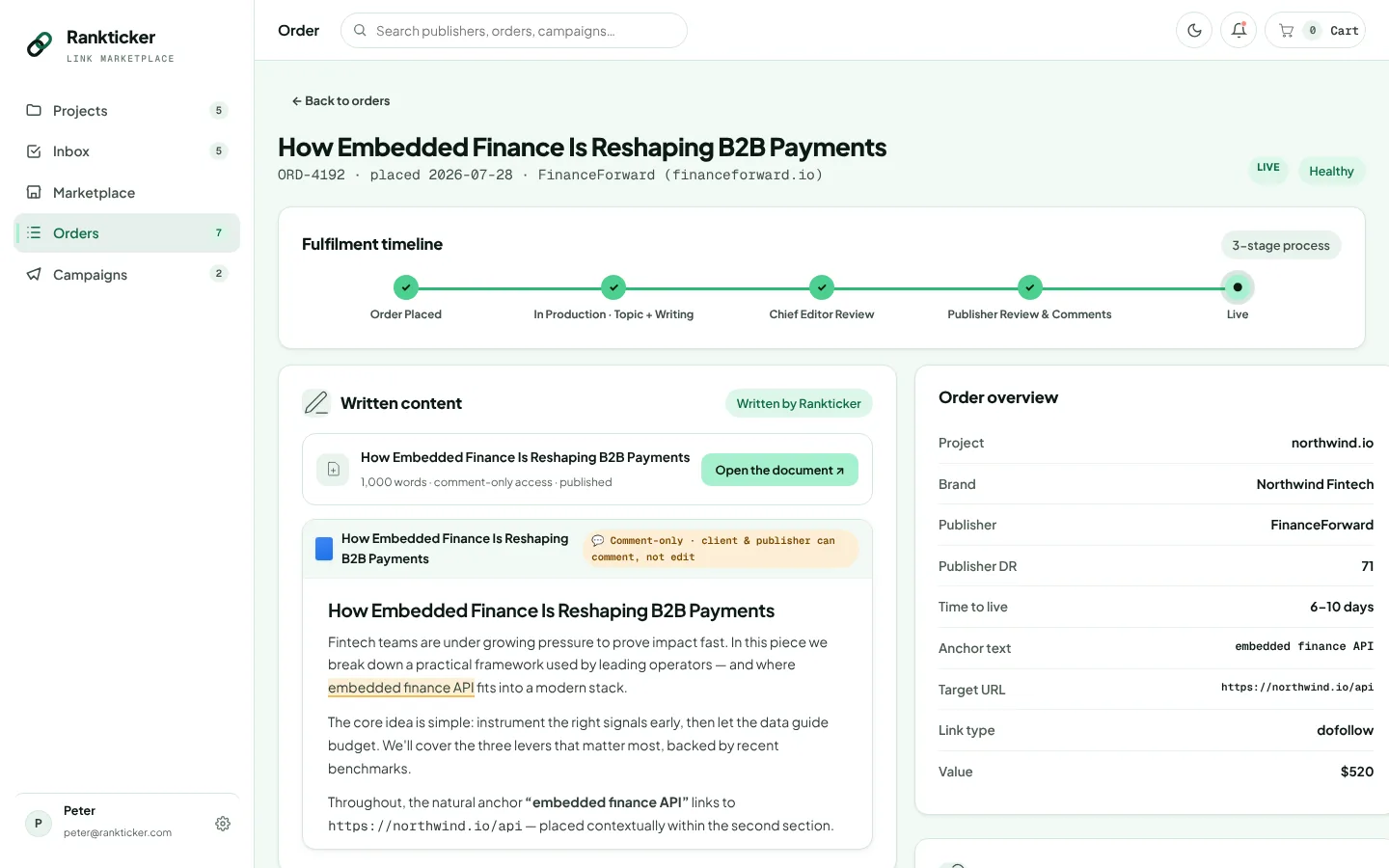
Every order shows the draft in an editor with comments, so your clinician can review the piece before it reaches the publisher.
In Rankticker
Filters that keep a health campaign clean
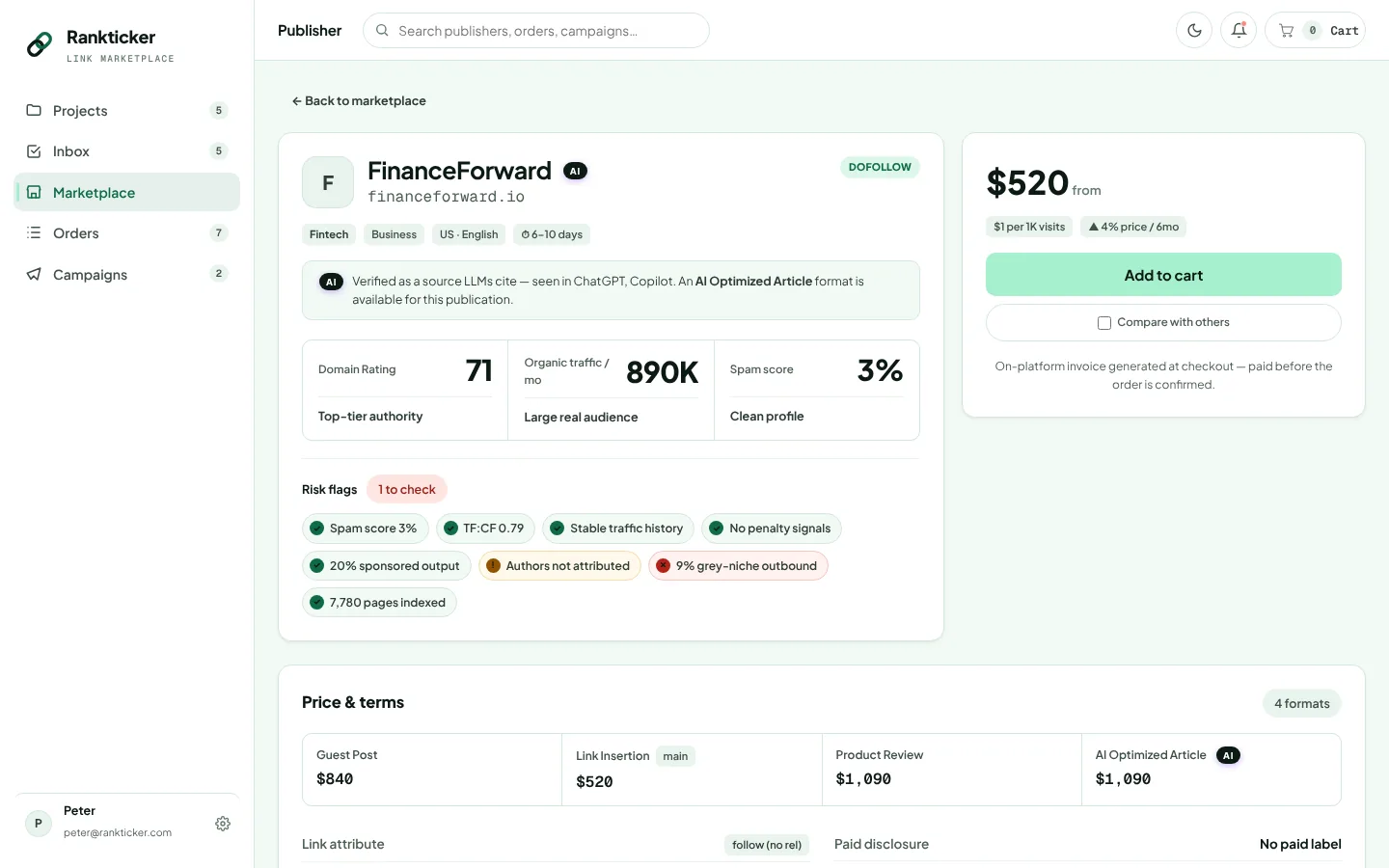
Start with the health niche filter and your country. Then look hard at each publisher profile. Author attribution tells you whether articles carry real bylines. The grey-niche outbound flag shows whether the site links out to pharmacies, CBD and similar. The AI-assisted content policy says if articles may be machine-written, which matters on a YMYL page. And the spam score and traffic trend show whether the site is still getting readers.
Is a DR floor useful here? Less than you'd expect. A DR 35 physiotherapy publication with named authors probably does more for a clinic than a DR 70 general news site's sponsored section. Set a modest DR floor and a traffic floor, then filter on relevance.
Example only: a private physiotherapy group with eight clinics in England. Objective: improve backlink profile. Monthly budget £1,500 to £3,000. Geo: United Kingdom, plus local news in the clinic towns. Targets: treatment pages for knee and back pain, eight location pages, two clinician bios. Anchors: mostly clinic name, clinician names and URLs, with descriptive location phrases. Max cost per link £280. Filters: health niche, English, DR 20+, organic traffic 1,000+, no grey-niche outbound, named author attribution. Mode: semi-auto, with a clinician approving content. Illustrative figures, not a quote.
AI visibility
Health questions people put to AI
People ask AI assistants health questions they'd once have typed into a search box, and some they'd only ask a friend: "is magnesium good for sleep", "how much does a private ADHD assessment cost in the UK", "best physio for runner's knee in Manchester". Answers to the general questions lean on NHS pages, medical bodies and large health publishers, and you can't buy your way onto those.
The local and commercial questions are more open. Answers draw on clinic pages, local coverage, directories and reviews (our UK local link building guide covers that side). Accurate, expert-attributed coverage on publications that AI engines already cite is the realistic goal, and the AIO Performance tab shows which publications those are in your niche. Our guide to link building for AI search goes further.
Health link building checklist
- Put a qualified, named author on every health article
- Check claims against ASA guidance and the GB NHC register before submitting copy
- Never mention prescription-only medicines in consumer-facing promotional content
- Filter out publishers with grey-niche outbound links
- Link to treatment, location and clinician pages, not claim-heavy product pages
- Keep anchors branded or descriptive, never a claim
- Label sponsored articles as ads and mark links rel="sponsored", as Google recommends
FAQ
Questions about health link building
Why is health link building harder than other niches?
Google gives extra weight to trust on health topics, so who wrote the content and where it appears matters more. Many publishers refuse health content or charge more, and UK advertising rules limit what sponsored articles can claim.
Can a sponsored article say our supplement helps with sleep or immunity?
Only if the wording matches a health claim authorised on the Great Britain nutrition and health claims register. Claims to treat or prevent disease are medicinal claims, which the ASA says can only be made for products licensed by the MHRA.
What pages should a private clinic build links to?
Treatment pages and location pages, ideally with named, qualified clinicians and a review date on the page. Clinician bio pages are good targets for expert commentary too.
Can I supply content written by our own clinicians?
Yes. Turn on 'supply own content' in the cart. The piece still goes through Chief Editor and publisher review, and you see every comment and edit request before it goes live.
Is CBD a grey niche on Rankticker?
Many publishers treat it as one. Each publisher profile shows the grey niches it accepts, so check that field before you order.
Keep reading
Related
Fashion and beauty link building
Fashion and beauty link building for UK brands: gift guide timing, product reviews, target pages, ASA rules on claims and filters, and a sample campai…
Food and drink link building
Food and drink link building for UK brands: recipe and gift-guide placements, product reviews, HFSS and alcohol ad rules, anchors and a sample campaig…
Topical relevance vs Domain Rating: what to pay for in 2026
Why topical relevance beats raw Domain Rating when you buy links in 2026, how Google reads link context, and a practical checklist for judging relevan…
Brand mentions in AI answers: how to measure them and how to earn them
How brand mentions, entities and unlinked citations shape AI answers in 2026, how to measure share of voice and sentiment, and how to get into cited s…
Content creation
Rankticker product tour
See the publishers before you spend a penny
Filter real publications by niche, DR, traffic and price. Every metric and the full price are on the listing.