Use cases · Food and drink
Food and drink link building
Food and drink lives on Instagram, TikTok and supermarket shelves, and very little of that turns into links. The links that help search come from food writers, round-ups and reviews, and the rules on what you can pay to promote are stricter than most brands realise.
Who this is for
Food and drink covers very different businesses. A challenger snack brand stocked in two supermarkets. A craft distillery selling online and at the farm shop. A DTC coffee roaster on subscriptions. A meal kit company. A restaurant group with six sites. They share an audience that discovers products visually and buys on impulse, and a set of advertising rules that bite harder than in most consumer categories.
Restaurants and single-site producers should read this with our local businesses page, because most of their search demand is local. Brands selling online nationally have more in common with ecommerce, plus a seasonal gifting peak that can make the year.
What makes links hard here
Recipe searches belong to recipe sites and food bloggers who have spent years on structured data and photography. Can a brand outrank them for "easy banana bread"? Probably not, and it doesn't need to. It needs to be the named ingredient in their recipes, or the product in the round-up that ranks.
Social coverage, however big, doesn't give you editorial links. A TikTok that sells out a hot sauce in a weekend is great for revenue and does nothing for the ranking of your "hot sauce gift set" page in November.
Then there's the calendar. Christmas gifting dominates for drinks, chocolate, hampers and anything giftable. Father's Day matters for spirits and beer. Barbecue season, Dry January, Veganuary and Burns Night each have their own content. Gift guides and seasonal round-ups are planned weeks or months ahead, so placements need booking early enough to be live, crawled and ranking before people search.
Formats and publication types that work
Recipe placements
A food writer develops a recipe that uses your product and links to it. Labelled as sponsored, written in their voice. This is the closest a brand gets to the recipe SERP.
Reviews and taste tests
Send product to food and drink reviewers, accept honest verdicts, and let the reviewer photograph it their way.
Gift guides
Lifestyle magazines, food titles and regional lifestyle sites. Book Christmas placements by early autumn.
Regional news
Openings, awards, a new local supplier, a planning fight over a distillery. Local stories travel well.
Data-led PR
Order data cut by region ("the most-ordered roast in each UK city") gives food desks and regional sites something to run.
Trade press and expert commentary
Grocery and hospitality trade press for listings, launches and founders' views. Useful for buyers more than consumers.
AI Optimized Articles fit the comparison questions people ask, like "best alcohol-free gin for a G&T". We think they work best on publications that already cover the category. Our comparison of digital PR, guest posts and link insertions helps when you're splitting a budget between them.
Target pages and anchors
Point links at pages that will exist next year. Recipe hubs on your own site, range and category pages, the stockist or "where to buy" page, and a gift set page that keeps the same URL every Christmas so the links build up year on year. Limited editions get removed; don't spend on them.
Anchors in food writing are product and brand names, almost always. "Acme Smoked Chilli Oil" or "a spoonful of Acme's chilli oil" reads naturally. Descriptive anchors ("a small-batch chilli oil from Bristol") are fine for a share of links. Generic commercial anchors like "buy chilli oil online" look out of place in a recipe and we'd leave them out. More on ratios in the anchor text guide.
Setting it up in Rankticker
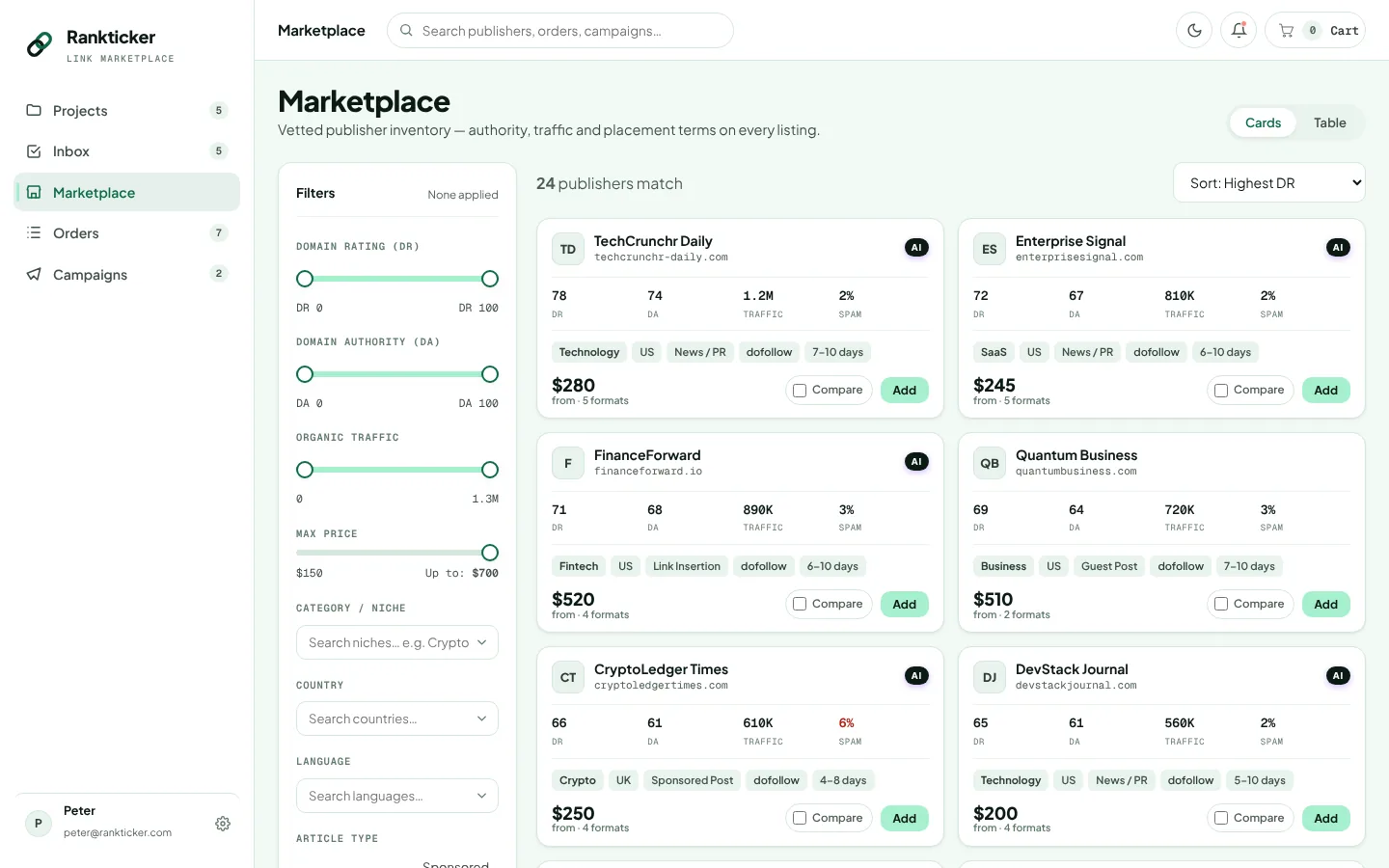
Filter the marketplace by food and drink or lifestyle, country United Kingdom and language English. Set article type to product review or sponsored post. A DR floor around 25 with steady organic traffic keeps the dead recipe blogs out. The AI badge marks publications verified as sources AI models cite.
Alcohol brands: open the publisher profile and check which grey niches the site accepts before you add it to the cart. Some food publishers decline alcohol, and the profile tells you before you pay. Check images and word count terms too; a recipe placement without decent photography is a waste.
Example campaign (illustrative only): a craft gin distillery with fewer than 50 staff. Objective "Improve backlink profile"; monthly budget £1,200, rising to £2,500 from September to November; geo United Kingdom; niche food and drink; target URLs the gift set page, the cocktail recipe hub and the stockists page; anchors brand, product names, "a gin cocktail recipe hub"; max cost per link £250; Semi-auto, approving only publishers that accept alcohol content and whose audience is adult.
The rules to check first
This is the section to read twice. None of it is legal advice.
Less healthy food and drink
Since 5 January 2026, paid-for online advertising of identifiable less healthy food and drink products has been restricted in the UK. The government's guidance collection and CAP Code rule 15.19 set out the detail. Exemptions include businesses with fewer than 250 employees, brand advertising that doesn't show an identifiable in-scope product, and owned media. If you're a larger business with in-scope products, assume a paid placement featuring one is caught and get advice before ordering.
Health and nutrition claims
CAP Code rule 15.1 allows only nutrition and health claims that meet the conditions in the applicable register, which for Great Britain is the GB Register. "Boosts immunity" in a sponsored article is your claim.
Alcohol
CAP Code section 18 bars alcohol ads from any medium where more than 25% of the audience is under 18, and anyone shown drinking must not be or seem under 25.
Disclosure
Paid and gifted content must be identifiable as marketing, and Google asks for paid links to carry rel="sponsored" or rel="nofollow". You choose the attribute at checkout.
AI visibility for food and drink
People ask assistants "best gin gift under £40", "high-protein snacks without sweeteners", "good alcohol-free beer for a wedding". Answers cite editorial round-ups, review sites and recipe sites. Track those prompts in the AIO Performance tab and watch which competitors are named next to you.
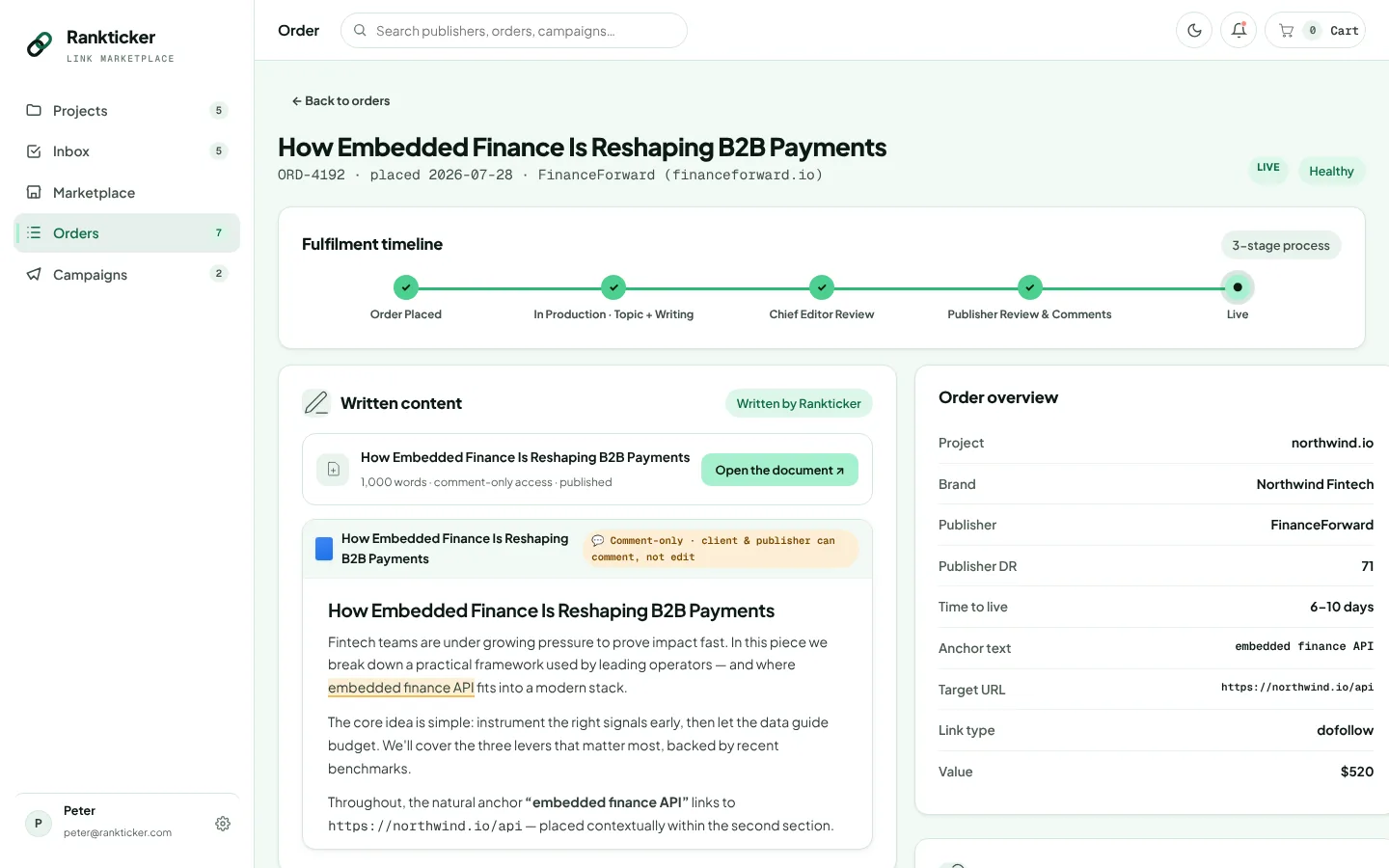
After a placement goes live, the order detail keeps the article, the comments and the Live Link Tracker in one place, so you can see the link is still there and still dofollow or sponsored as ordered when the gift guide is updated next year.
Food and drink checklist
- Gift guide placements booked by early autumn
- A gift set URL that stays the same every year
- Links to recipe hubs, ranges and stockist pages, not limited editions
- HFSS status of each featured product checked if you have 250 or more employees
- Only authorised nutrition and health claims in any copy
- Alcohol placements only on publishers that accept it, with an adult audience
- Regional data story ready for each peak season
FAQ
Questions about food and drink link building
Do the less healthy food advertising rules apply to sponsored articles?
They can. Since 5 January 2026, paid-for online advertising of identifiable less healthy food and drink products is restricted in the UK, with exemptions including businesses with fewer than 250 employees and brand advertising that doesn't show a specific product. A paid placement featuring an in-scope product may be caught, so check with your legal or regulatory adviser.
Which pages should food and drink backlinks point to?
Recipe hubs, range and category pages, stockist pages and gift set pages that keep the same URL each year. Avoid limited-edition product pages that will be removed.
Can alcohol brands buy sponsored placements?
Yes, with care. CAP Code rule 18.15 says alcohol ads must not appear in any medium where more than 25% of the audience is under 18, and many publishers restrict alcohol content. Check the grey niches each publisher accepts on its Rankticker profile.
What makes a good food and drink digital PR story?
Your own data with a regional angle: what people order, when and where. Regional news and food desks use it, and a local cut of the same story works in several towns.
Can I make health claims in a sponsored food article?
Only authorised ones. CAP Code rule 15.1 says nutrition and health claims must meet the conditions in the applicable register, which for Great Britain is the GB Nutrition and Health Claims Register.
Keep reading
Related
Ecommerce link building
Ecommerce link building that reaches category pages: product reviews, gift guides, seasonal timing, anchors and AI shopping prompts, plus an example c…
Fashion and beauty link building
Fashion and beauty link building for UK brands: gift guide timing, product reviews, target pages, ASA rules on claims and filters, and a sample campai…
Digital PR vs guest posts vs link insertions: which format fits which job
Digital PR vs guest posts vs link insertions: when each format fits, what drives cost, risks, turnaround and AI visibility value, with a comparison ta…
Local link building for UK businesses
Local link building for UK businesses in 2026: local news, chambers of commerce, sponsorships, UK directories that matter and Google Business Profile.
Content creation
Rankticker product tour
See the publishers before you spend a penny
Filter real publications by niche, DR, traffic and price. Every metric and the full price are on the listing.